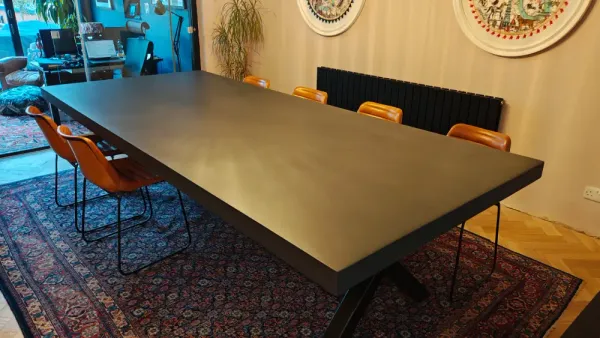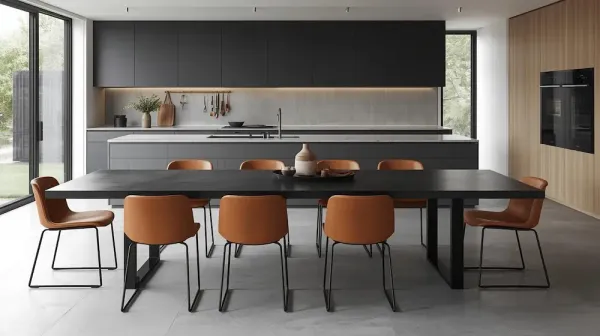
8 Seater Resin River Dining Tables
8 seater resin river dining tables are a defined buying class: not a “rough capacity”, but a set of dimensions, base clearances and chair counts that determine how the table works in real life.
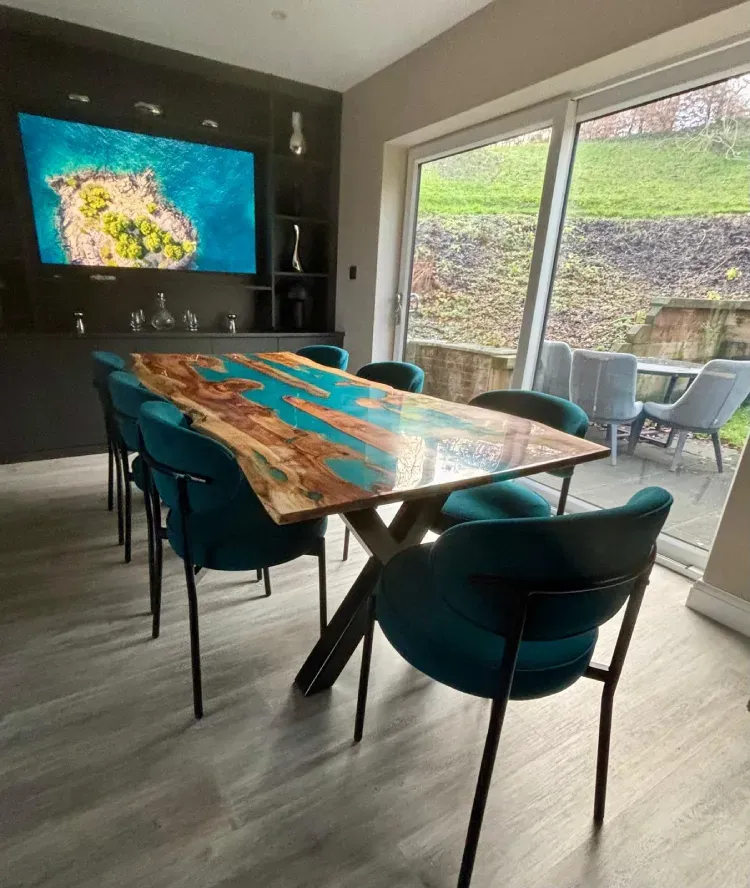
8 seater resin river dining tables are a defined buying class: not a “rough capacity”, but a set of dimensions, base clearances and chair counts that determine how the table works in real life. At this size, the goal is simple — comfortable seating without dead space, and a river proportion that stays intentional rather than stretched or cramped.
This city expands RockVine’s resin river authority by defining 8 seater as its own spec-led product class — and by routing buyers back to the Resin River Dining Tables hub when they are ready to commission.
What defines a 8 seater resin river dining table
- Typical length range: 2000–2400mm (most 8-seaters live here, depending on chair style and comfort target)
- Usable seating math: chair width + elbow room + end clearances (not the marketing “seats 10” claim)
- River proportion: the channel width must scale with the slab width so it still reads as a “river”, not a stripe
- Base geometry: leg position and under-table clearance decide whether every seat is actually usable
- Room circulation: you need practical walkways around the table — not just enough space to stand still
Who this table class is for
- Homes that regularly seat 8 and want every seat genuinely usable — including ends.
- Entertainers who want a true hosting table with clear surface zoning (place settings, serving, centrepieces).
- Projects where the table is the focal object and needs architectural scale.
Room fit reality: Best suited to larger kitchen/diners and dining rooms where 8 seats can stay comfortable without compromising walkways.
RockVine manufacturing authority
Resin river tables fail at this size for predictable reasons: poor slab selection, unstable timber, under-built bases, and pours that don’t scale. RockVine builds this class as engineered furniture — dried and stabilised live-edge slabs, controlled epoxy pours, and welded steel bases designed around how many people need knee space.
We design the river, slab pairing and base as one system. That’s how you avoid the common outcomes: a table that “seats 8” but only comfortably seats 6, a river that looks visually thin, or a base that steals the end seats.
For 8 seaters, RockVine focuses on seat usability and structural stiffness. A premium 8-seater shouldn’t bounce, rack, or feel like the ends are an afterthought. The steel base and fixing method are part of the size spec.
Design options that buyers actually choose
- Timber species + character: oak (high contrast), walnut (rich grain), ash (modern lighter tone)
- River style: clear, opaque, deep colour or metallic finishes (chosen to match the interior palette)
- Edge profile: live edge for organic character, or lightly refined edges for a cleaner architectural read
- Base pairing: boxed steel for stiffness, X-frame for statement geometry, U-frame for clean leg clearance
- Finish level: satin for daily practicality or gloss for maximum depth and “river” drama
Buying guidance: what to compare before you commission
- Confirm the real seating count — ask where the legs sit and whether end seats are usable.
- Measure your chairs — including arm width, and allow breathing space between seats.
- Check circulation clearance — you typically want comfortable walkways around dining tables, not tight squeezes.
- Ask how the timber is stabilised — this is the difference between a premium table and a future repair job.
- Compare the base build — steel thickness, weld quality, and how the top is fixed.
Link structure: where to go next
- Resin River Dining Tables (main hub)
- Resin river dining table prices (UK)
- Resin river table care guide
- Resin river colours & finishes
- Shape cities: round / oval / rectangular
Next step
If you already know your room size and preferred slab character, commission this class directly via the Resin River Dining Tables hub. If you’re still deciding between sizes, we’ll spec the chair count and clearances first — then lock the river proportion and base geometry around your layout.