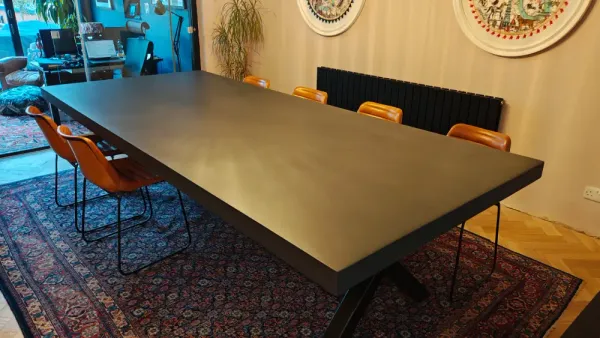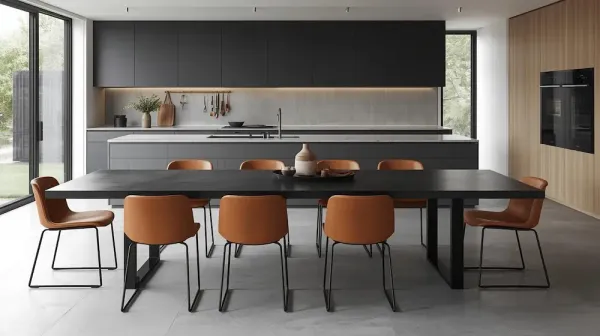
Polished Concrete Dining Tables: Pros, Cons & Real-World Truths
The real advantages, drawbacks and long-term realities of owning a polished concrete dining table — written by the artisans who make them.
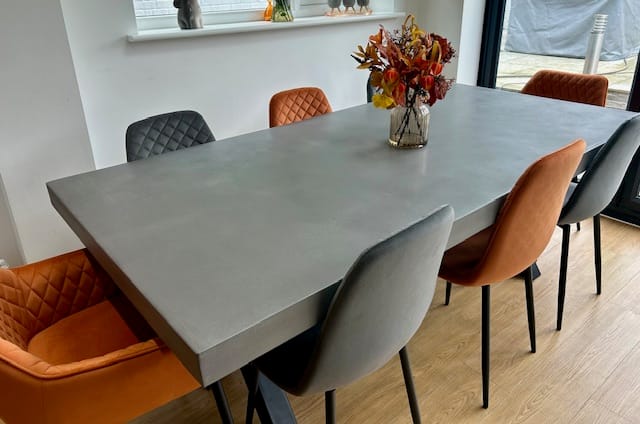
Are Polished Concrete Dining Tables Actually Practical?
Polished concrete dining tables have exploded in popularity across modern British homes, interior design magazines and architectural projects. Their sculptural appearance, seamless finishes and contemporary presence make them visually striking — but many buyers still wonder:
Are they practical? Do they crack? Are they hard to maintain?
The truth is: polished concrete tables can be exceptional — or a complete nightmare — depending entirely on how they’re made.
This guide breaks down the real pros, cons and long-term truths so you can make an informed decision.
The Real Pros of Polished Concrete Dining Tables
1. Extraordinary Durability
A professionally engineered polished concrete tabletop is far stronger than timber, stone or laminate. When correctly reinforced, sealed and layered, it resists:
• heat
• scratches
• moisture
• staining
• daily impact wear
This makes concrete one of the most robust dining surfaces available for family homes, open-plan kitchens and hospitality spaces.
2. Seamless, Sculptural Design
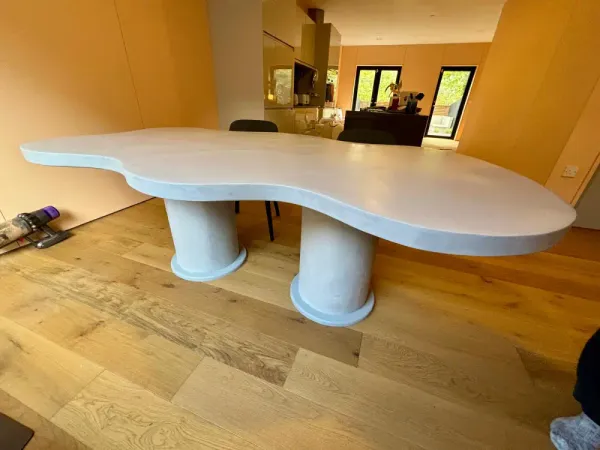
Unlike stone slabs, polished concrete can be cast into monolithic forms — allowing for:
• ultra-thin profiles
• curved edges
• seamless waterfall ends
• floating designs
• integrated colour and texture
This gives you freedom that simply isn’t possible with marble, quartz or wood.
3. Fully Customisable
Every RockVine polished concrete table is made to order, meaning you control:
• dimensions
• thickness
• edge profile
• colour tone
• satin, matte or gloss finish
• base design
No two are ever the same.
4. Surprisingly Low Maintenance
Contrary to popular belief, modern sealed concrete tables are not high-maintenance. Once sealed correctly they require only:
• warm water
• mild detergent
• soft cloth cleaning
No oils, polishes or harsh chemicals.
The Cons — And What Most Retailers Don’t Tell You
1. Poorly Made Concrete Tables Do Crack
Concrete will crack if:
• it is poured too thin
• not properly reinforced
• poorly cured
• badly sealed
This is why many cheaper “concrete look” suppliers fail within months. Structural engineering matters.
RockVine tables are multi-layer reinforced and cured under controlled conditions to eliminate structural stress.
2. Weight & Installation Considerations
Concrete tables are heavy. This requires:
• professional delivery
• suitable floor strength
• proper base engineering
Handled correctly, weight becomes a benefit — providing stability and longevity.
3. Not All Concrete Is Food-Safe
Low-grade sealers can be porous, absorb liquids and stain. High-performance architectural sealers — like those used by RockVine — are non-porous, stain-resistant and food-safe.
Are Polished Concrete Tables Worth It?
If you want:
• longevity
• bespoke design
• architectural presence
• minimal maintenance
• a true statement dining table
— then yes, absolutely.
But only if it’s engineered properly.
Frequently Asked Questions
Do concrete dining tables crack?
Only poorly made ones. Professionally reinforced and cured concrete tables are extremely stable.
Are concrete dining tables cold to the touch?
They retain ambient room temperature and are comfortable for daily use.
Can you put hot pans on concrete?
Yes — properly sealed concrete is heat resistant.
Do they stain?
High-quality sealers make concrete non-porous and stain resistant.
Explore RockVine Concrete Tables
• Explore the Cloud polished concrete dining table collection
• View bespoke concrete dining tables
• Discover Slimline concrete dining tables
Not sure on budget yet? View our Concrete Dining Tables Price Guide