Polished Concrete Vs Wood Dining Tables
Compare polished concrete dining tables vs solid wood tables for durability, care and long term value.
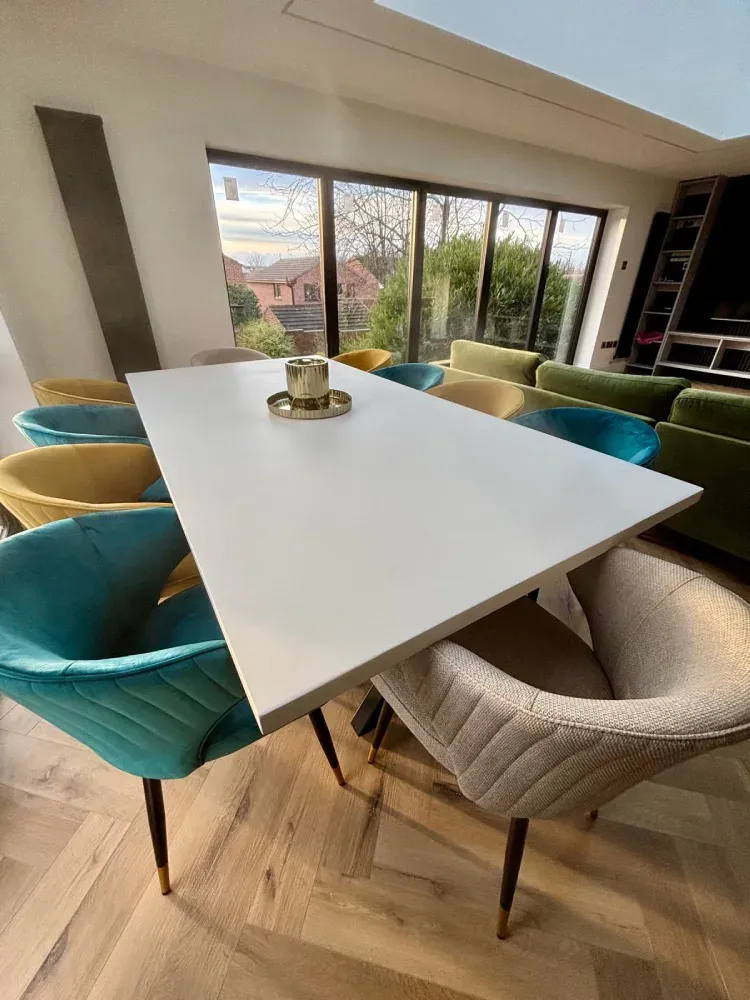
Choosing between a polished concrete dining table and a solid wood dining table is one of the most common comparisons buyers make. This guide explains the key differences in durability, maintenance, appearance and long term value.
Durability And Longevity
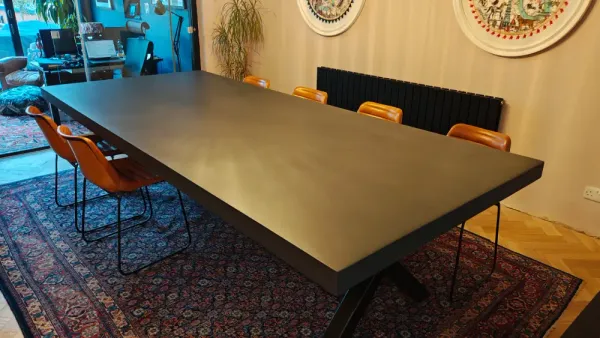
Polished concrete tables are extremely durable and resist warping, moisture and heat far better than solid wood. Timber tables can expand, contract and mark more easily over time.
Maintenance Requirements
Concrete tables require minimal maintenance beyond basic cleaning, while solid wood surfaces need regular oiling and careful moisture control.
Stain And Heat Resistance
Polished concrete is naturally stain and heat resistant, making it ideal for busy kitchen diners. Wood surfaces are more vulnerable to spills and heat marking.
Aesthetic And Design Options
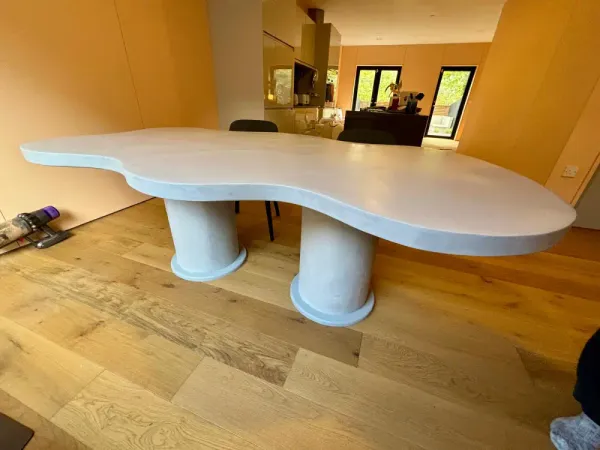
Concrete offers a clean modern aesthetic with a wide range of colours and base styles. Wood provides a traditional natural appearance with visible grain patterns.
Long Term Value
Although polished concrete tables may have a higher initial cost, they often deliver lower lifetime replacement cost compared to wood.
Why RockVine Tables Stand Apart
RockVine manufacture in house using fibre reinforced microcement layering and sealed polishing systems. Browse the full range of polished concrete dining tables.
Design Your Own Table
Every RockVine table is built to order. You can design your table online or view typical polished concrete dining table prices.