What Affects Live Edge Dining Table Price?
A guide to what affects live edge dining table prices including timber, size, base design and finishing systems.
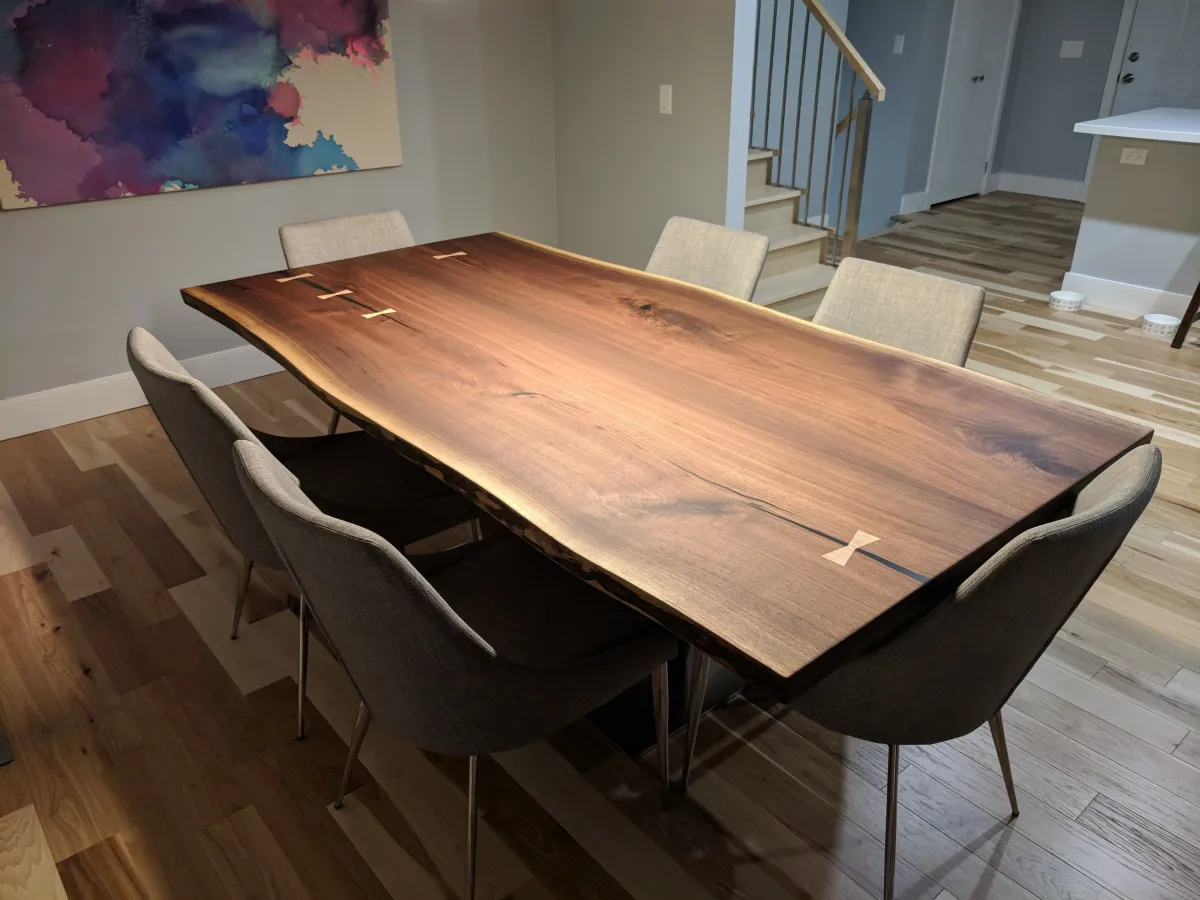
Live edge dining table prices can vary significantly depending on timber choice, slab width, base design and finishing specification. Understanding what affects pricing helps buyers make informed decisions and avoid false comparisons.
At RockVine, every live edge dining table is built to order, allowing cost to directly reflect material quality and craftsmanship rather than mass production shortcuts.
Timber Species And Slab Quality
Oak, walnut and ash are commonly used for live edge dining tables. Wider slabs with strong grain character and minimal defects require higher-grade timber, which directly affects cost.
Table Size And Thickness
Longer and thicker slabs require more raw material and longer drying times, increasing material cost and production lead time.
Base Design And Fabrication
Welded box steel bases, custom powder coating and structural reinforcement add to fabrication time and cost but provide long-term stability.
Finishing Systems
Commercial-grade hardwax oil finishing systems provide breathable protection and require multi-stage application, contributing to both durability and final price.
Custom Specification
Bespoke dimensions, colour staining and edge shaping increase labour time and finishing complexity.
Browse the full range of live edge dining tables to view available designs. You can also design your own table to configure your preferred size and finish, and explore typical live edge dining table prices to understand real-world investment levels.
Every RockVine live edge dining table is priced to reflect real craftsmanship and material quality.